In the earliest years of childhood, pretend play is more than a sweet activity. It is one of the ways children begin to understand feelings, relationships, language, and the world around them. When a child pours invisible tea into a tiny cup, wraps a ribbon around a toy, or announces that the garden is now a magical kingdom, they are practicing creativity, communication, and confidence all at once.
This is the gentle charm at the heart of Savannah and Jude Play Pretend. The story uses familiar childhood moments, such as walking, counting, listening, dressing up, and sharing a pretend tea party, to create a soft learning experience. Children are not being pushed into lessons. Instead, they are invited into play, where learning happens naturally.
Pretend play allows children to try new roles in a safe and joyful way. A child may become a princess, a helper, a host, a friend, or even the leader of a little adventure. In the story, Savannah welcomes Jude and the animals into her playhouse and gives them space to join her pretend world. That simple act carries a meaningful message for young readers. Everyone can be included. Everyone can imagine. Everyone can take part.
Through pretend play, children also build language skills. They learn how to ask questions, respond to others, describe what they see, and express what they want. A pretend tea party may sound simple, but it gives children a chance to practice polite phrases, turn-taking, and social confidence. “Would you like some tea?” becomes more than a sentence. It becomes a small lesson in kindness.
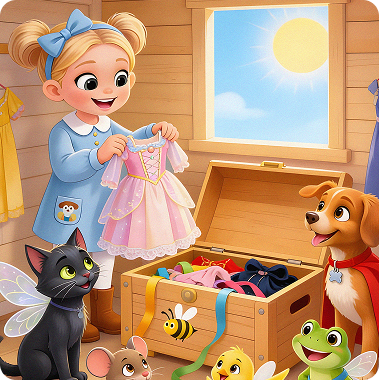
The dress-up scene also gives children permission to explore identity and creativity. Jude chooses a cape, Black Cat wears fairy wings, Savannah picks a princess dress, and the smaller animals enjoy their bright ribbons. Each choice is playful, but each one also tells children that imagination belongs to everyone. They can become bold, gentle, silly, brave, or magical for a little while, and that freedom helps them feel more comfortable expressing themselves.
Another beautiful part of pretend play is how it connects children with others. Story time itself can become a shared game between a child and a grown-up. A parent might pause and ask, “What would you wear from the dress-up box?” or “Who would you invite to tea?” These questions extend the story beyond the page and bring children into the experience.
Savannah and Jude’s world is bright, friendly, and easy for young children to enter. It uses play as a doorway to counting, listening, naming animals, noticing colors, and celebrating friendship. Most of all, it reminds us that children do not need complicated tools to learn. Sometimes, all they need is a friend, a little imagination, and someone willing to join them in the game.
For parents and caregivers, this kind of story can become a simple invitation to play after reading. Children can set out toy cups, choose scarves or blankets for dress-up, count their steps around the room, or create new animal friends for Jude and Savannah to meet. These follow-up activities help children remember the story while developing speech, movement, and social awareness in a relaxed way.